



Planthoppers to the Rescue!
EATING THROUGH THE HYACINTH AT HARTIES
SMALL HOPPERS, BIG JOB
Hartbeespoort Turns to Nature for Relief
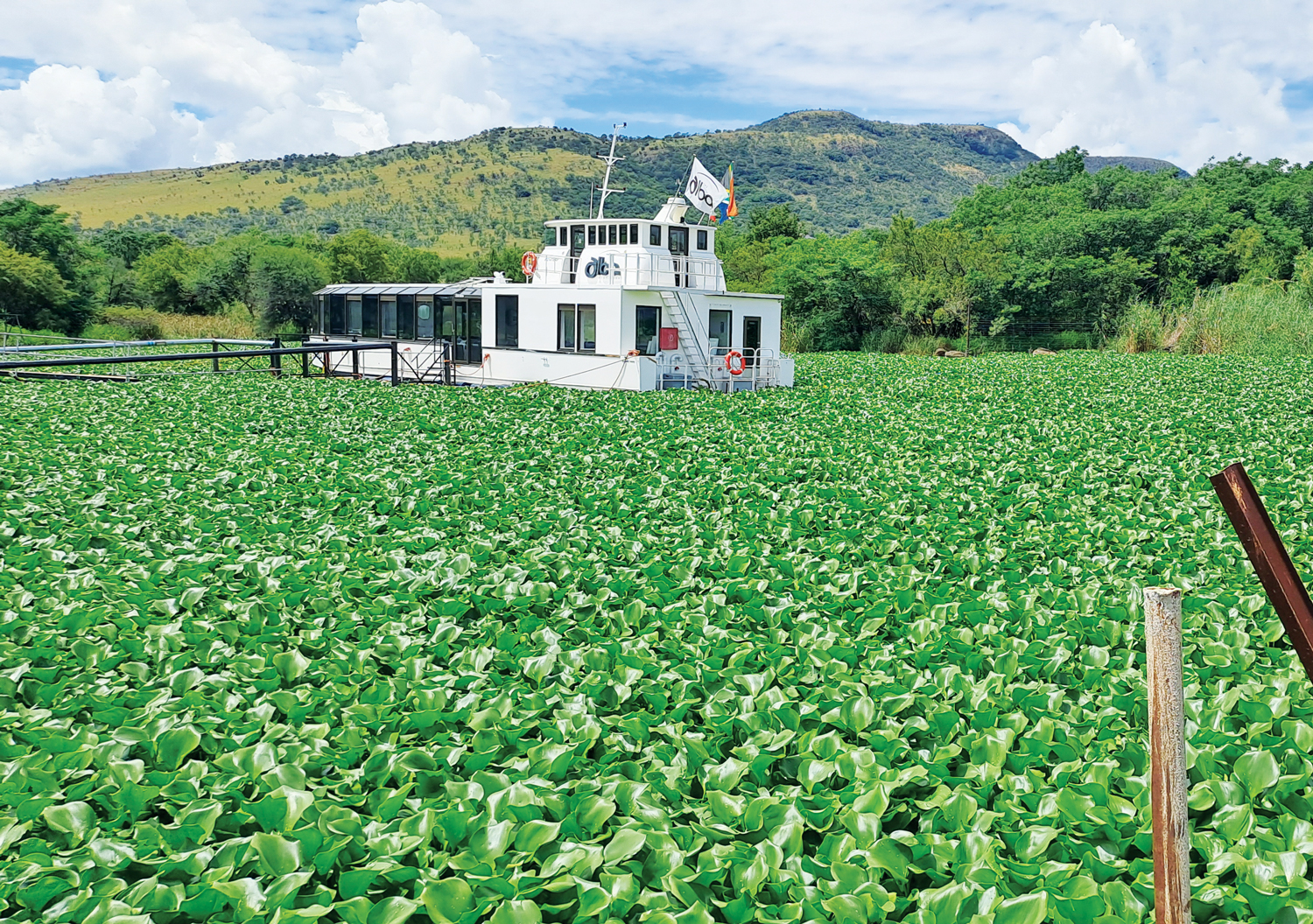
Platinum Weekly newspaper | Hartbeespoort Dam is once again feeling the pressure of a fierce surge of water hyacinth, with coverage estimated at 40–45% in the week of 4 November 2025. What many residents see as a sudden crisis is, in reality, the result of a complex environmental cycle decades in the making.
According to prof. Julie Coetzee, deputy director of the Centre for Biological Control (CBC) at Rhodes University and principal scientist at the NRF South African Institute for Aquatic Biodiversity, the dramatic green spread is no surprise.
“It looks overwhelming, but there is no quick fix,” prof. Coetzee explains. “Peak summer growth, exposed old seed banks, and nutrient-rich runoff have all aligned to fuel rapid expansion. But we are responding — and the long-term strategy is working.”
Biological control: nature’s slow but powerful solution
Since August, the CBC has intensified its biological control programme built on a tiny but highly effective ally:
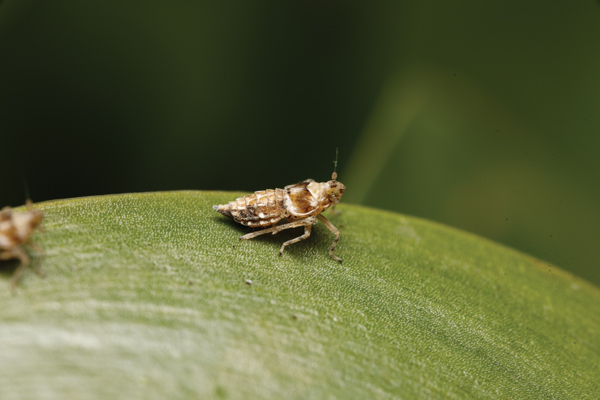
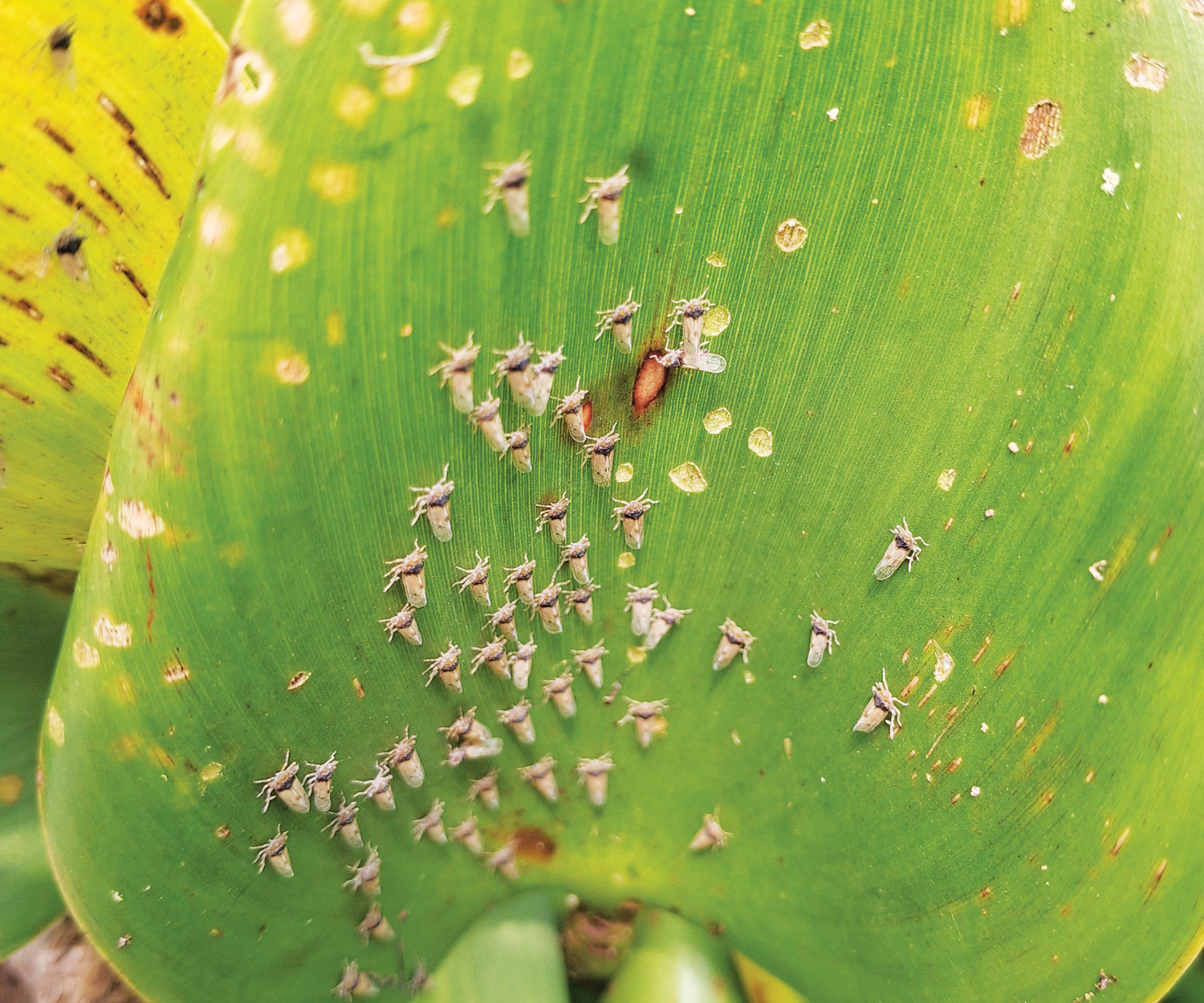
Megamelus scutellaris, commonly known as the water hyacinth planthopper. These insects stress the plants, prevent flowering, and — crucially — stop new seeds from forming. Over time, this depletes the dam’s 50-year-old seed bank, the true driver of seasonal hyacinth explosions.
“Since 2019, these insects have kept summer hyacinth levels below 5%,” says Prof. Coetzee. “The challenge isn’t failed biocontrol — it’s the massive seed germination that happens every spring. Each year we prevent flowering, the seed bank shrinks. That is long-term success.”
More than 100,000 insects have already been released, with 20,000 more added each week, supported by community-run rearing stations.
A dam under pressure
Magalies Water and contractors are removing up to 500 tonnes of hyacinth per day, using harvesters, excavators, and manual crews working 22-hour days. But progress is often slowed by: shallow and inaccessible shorelines, vandalised containment booms, safety restrictions at the dam wall, and rapid plant regrowth during peak season.
Despite these challenges, an expanded fleet — including additional excavators and harvesters — is being deployed this month.
The work on the water
Prof. Coetzee emphasises that biological control must work hand-in-hand with harvesting and nutrient reduction. “Integrated management is the only path to lasting control,” she says. “Biocontrol weakens growth, harvesting removes mass, and reducing upstream pollution tackles the root cause.”
What About Spraying? Hippos? Commercial Harvesting?
Some community suggestions appear every year — but science and safety tell a different story.
- Herbicides cause dangerous blue-green algal blooms and trigger mass flowering, adding millions more seeds.
- Hippos were tried historically and nearly starved — hyacinth offers almost no nutrition and poses human-safety risks.
- Commercial harvesting is helpful but cannot keep up with peak seasonal growth.
“If spraying worked, we’d use it,” prof. Coetzee says plainly. “We need solutions that don’t make next year’s problem worse.”
Safety First: NSRI Warns Boaters
The NSRI has issued a strong advisory urging boaters to reconsider launching onto the dam, warning of unpredictable drifting hyacinth mats, engine damage, entanglement hazards, and limited rescue options. “Every rescue in these conditions is dangerous,” says Arthur Crewe, NSRI station commander. Boaters who still choose to launch are urged to check wind forecasts, monitor hyacinth movement, and log trips on the SafeTRX app.
What residents can expect — and when
The CBC and Magalies Water aim to achieve 95% open water by March 2026. “Community anger is justified,” says prof. Coetzee. “But giving up will doom the dam. We’re asking for 12 months of sustained support so the science can do its job.”
The bottom line
This is not a failure — it is a long-term recovery from a 50-year problem. The insects are working. The harvesters are working. The system is responding. But the dam will only heal through persistence, partnership, and patience. For now, on Hartbeespoort’s waters, the tiniest workers may be the most important ones of all.
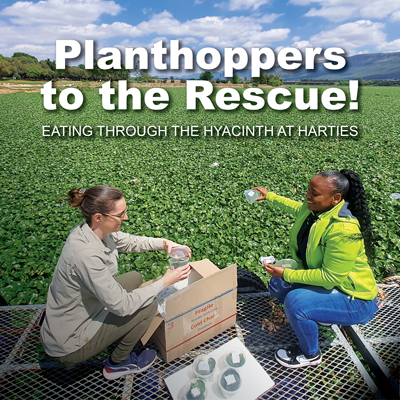
Main photo: Dr Kelby English of the CBC and Kefilwe Nduli of Magalies Water releasing Megamelus scutellaris into Hartbeespoort Dam — part of a coordinated biological control effort.